
Blanks · Fabric guide 2026
Heavy cotton T-shirts: what gsm means and when heavier is better
Heavy cotton sounds like a quality badge, but it is really a statement about fabric weight. Here is what gsm means, how the common weight classes compare and when a heavier tee is actually the better blank for your print.
Heavy cotton means a T-shirt with a higher fabric weight, usually approx. 180 to 200 gsm and up, against approx. 145 to 150 gsm for light tees. Fruit of the Loom's Heavy Cotton is approx. 195 gsm, the Valueweight approx. 165 gsm. Heavier tees feel sturdier, are less see-through and suit screen printing and merch. Lighter tees are cooler and cheaper. A plain tee at Marmalade Co. costs €6.95, €6.26 from 5 pieces (delivery to Ireland and EU, not UK).
Matching products
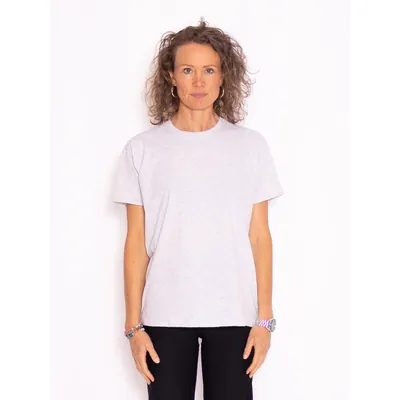 Fruit of the Loom T-ShirtUnisex, cotton, XS to XXXL€6.95from 5 pcs €6.26 eachDelivery to Ireland & EU €7.00 · 2-3 working daysView deal-10 % from 5 pcs
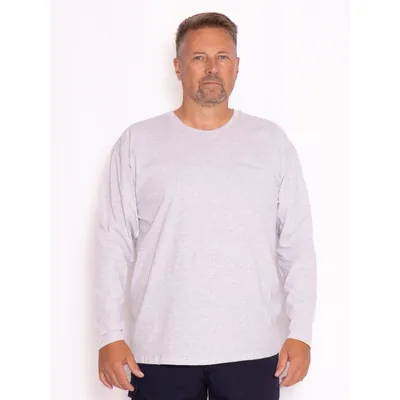 Fruit of the Loom Long Sleeve T-ShirtLong sleeve cotton tee€8.95from 5 pcs €8.06 eachDelivery to Ireland & EU €7.00 · 2-3 working daysView deal-10 % from 5 pcs
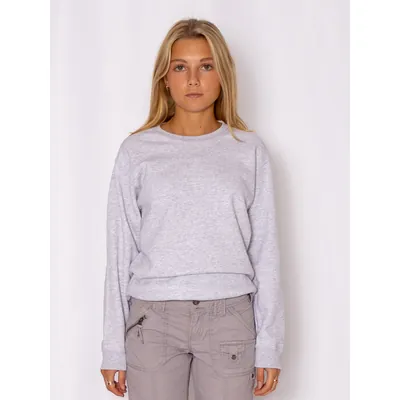 Fruit of the Loom SweatshirtCrew neck sweatshirt€16.95from 5 pcs €15.25 eachDelivery to Ireland & EU €7.00 · 2-3 working daysView deal
What does "heavy cotton" mean?
"Heavy cotton" describes the fabric weight of a T-shirt, not a special type of cotton. A heavy cotton tee simply uses more cotton per square metre, so the fabric is thicker, denser and less see-through.
The term is also a product name: Fruit of the Loom sells a T-shirt called Heavy Cotton at approx. 195 gsm. In everyday use, though, people mean any tee in the heavier weight classes.
What does gsm mean on a T-shirt?
gsm stands for grams per square metre. It tells you how much one square metre of the fabric weighs. You will also see it written as g/m². The higher the number, the heavier and usually thicker the fabric.
Some shops, especially in the US, give weight in ounces per square yard. Roughly, 5 oz is approx. 170 gsm and 6 oz is approx. 200 gsm. Weights are always approximate: dyeing can change them slightly, and darker colours are often a little heavier than white.
How do the T-shirt weight classes compare?
Using Fruit of the Loom's classic tees as a reference:
| Class | Example | Approx. gsm | Feel | Good for |
|---|---|---|---|---|
| Lightweight | Original | approx. 145 | Soft, airy | Summer events, giveaways, DTF |
| Light to mid | Iconic | approx. 150 | Soft, slightly firmer | Everyday tees, fashion fits |
| Mid weight | Valueweight | approx. 165 | Balanced | Club shirts, workwear, all methods |
| Heavy | Heavy Cotton | approx. 195 | Sturdy, opaque | Merch, screen printing, premium feel |
Heather colours in all classes contain some polyester, which slightly changes how they feel and how DTG ink sits on them.
When is a heavier T-shirt the better choice?
- Merch and band shirts: buyers judge quality by feel, and a thicker tee feels more valuable.
- Light colours: a white heavy tee is far less see-through than a light one.
- Screen printing: dense fabric holds ink well and stays flat on the press.
- Workwear: heavier cotton copes better with frequent washing and daily wear.
- Boxy, relaxed fits: heavier fabric drapes and holds its shape better.
When is a lighter T-shirt better?
- Hot weather and sport: approx. 145 to 150 gsm is noticeably cooler.
- Big one-day events: fun runs, festivals or stag and hen parties rarely need a heavy tee.
- Tight budgets: lighter tees are usually cheaper per piece.
- Layering: a light tee under a hoodie or shirt is more comfortable.
A quick way to decide is to think about when and how often the shirt will be worn. A shirt for one sunny afternoon should be light and cheap. A shirt people will wear every week for years, or one you want to sell as merch, deserves the extra weight. If you are printing for a mixed group with different tastes, a mid weight of approx. 165 gsm is often the safest compromise. Find matching blanks in blank T-shirts for printing.
Do heavy cotton tees print better?
They print at least as well, and for screen printing often better. The tighter, thicker knit gives a stable base, so colours look solid and the shirt does not stretch out of shape during printing. DTF and vinyl sit well on any weight. DTG works best on 100 % cotton regardless of weight, and dark shirts need pretreatment.
Keep in mind that thickness is not the same as quality. A well-knitted mid weight tee can look better printed than a heavy tee with a rough, uneven surface. Before a large order, it is worth buying one or two samples, printing a test and washing it a few times.
Heavy tees also take slightly longer on the heat press, because the thicker fabric holds more moisture. A short pre-press of a few seconds helps DTF and vinyl bond evenly. After printing, wait approx. 24 hours, wash inside out at 30 to 40 °C, skip the fabric softener and avoid the tumble dryer. Heavier cotton dries more slowly on the line, but it keeps its shape better over many washes.
What do plain cotton T-shirts cost?
At Marmalade Co. a plain Fruit of the Loom T-shirt costs €6.95 incl. VAT in 15 colours from XS to XXXL. The price drops 5 % from 3 pieces and 10 % from 5 pieces, to €6.26 each. Check the product page for fabric details of the current model.
DHL delivery costs €7 flat and takes about 2 to 3 working days to Ireland, Austria, Belgium, Finland, France, Germany, Italy, the Netherlands, Poland, Portugal and Spain. There is currently no delivery to the United Kingdom.
| Product | 1 pcs | 10 pcs | 50 pcs | 100 pcs | 250 pcs |
|---|---|---|---|---|---|
| T-Shirt | €13.95€13.95 each | €69.55€6.96 each | €319.75€6.40 each | €632.50€6.33 each | €1,570.75€6.28 each |
| Sweatshirt | €23.95€23.95 each | €159.55€15.96 each | €769.75€15.40 each | €1,532.50€15.33 each | €3,820.75€15.28 each |
| Long Sleeve T-Shirt | €15.95€15.95 each | €87.55€8.75 each | €409.75€8.20 each | €812.50€8.13 each | €2,020.75€8.08 each |
Plain cotton T-shirts in 15 colours from €6.26 each from 5 pieces. Delivered to Ireland and the EU.
See T-shirt details →